AI News

Curated for professionals who use AI in their workflow

March 07, 2026

AI news illustration for March 07, 2026

Today's AI Highlights

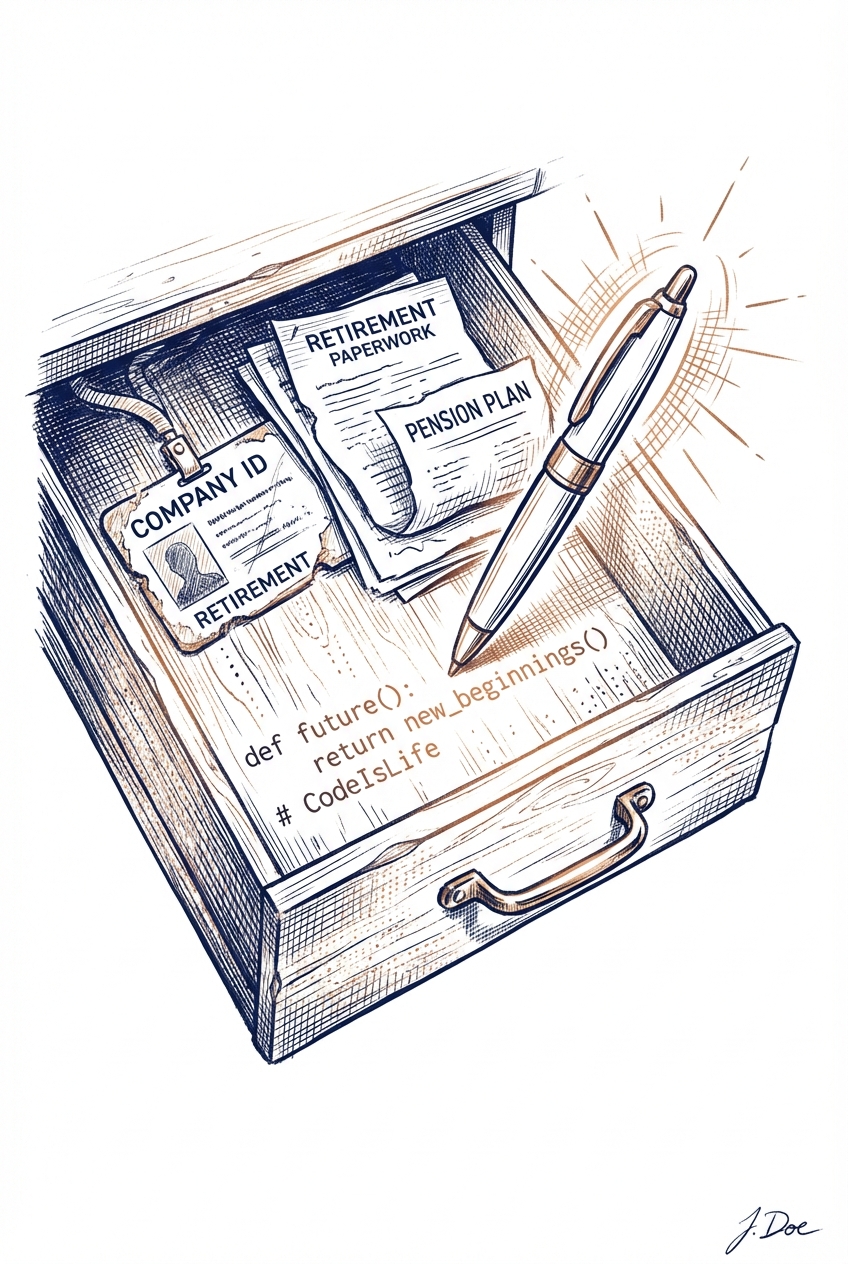
OpenAI's GPT-5.4 is making waves with substantial improvements in coding and professional tasks, featuring a million-token context window and extreme reasoning mode that's reigniting developer passion even among veteran programmers considering retirement. Meanwhile, the AI landscape is shifting dramatically as users flee ChatGPT for Claude following OpenAI's defense partnerships, prompting platforms like Zapier to embrace multi-model flexibility so professionals can finally choose the best AI for each specific task instead of being locked into a single provider's ecosystem.

⭐ Top Stories

#1 Coding & Development

GPT 5.4 First Test Results

OpenAI's GPT 5.4 shows significant improvements in coding efficiency, computer use automation, and professional task handling according to early hands-on testing. The release appears to deliver meaningful performance gains for developers and professionals building real projects, though practical limitations remain to be fully understood through broader use.

Key Takeaways

  • Test GPT 5.4 for coding projects if you're currently using GPT-4, as early results suggest substantial efficiency improvements in development workflows
  • Explore the enhanced computer use capabilities for automating repetitive professional tasks that previously required manual intervention
  • Monitor real-world performance reports over the coming weeks, as initial hands-on testing shows promise but may not reflect all edge cases
#2 Industry News

AI News: Everyone's Leaving ChatGPT!

Users are reportedly migrating from ChatGPT to Claude following OpenAI's Department of Defense partnership, with ChatGPT uninstalls surging 295%. This shift coincides with major model updates across platforms (GPT-5.3/5.4, Gemini 3.1 Flash Lite) and Claude introducing free memory features, making it a more competitive alternative for daily professional use.

Key Takeaways

  • Evaluate Claude as a ChatGPT alternative, especially if concerned about data usage policies—the platform now offers free memory features and import capabilities
  • Monitor the new GPT-5.3 Instant and GPT-5.4 releases for potential speed and capability improvements in your current workflows
  • Test NotebookLM's new video overview generation feature for creating visual summaries of research and documentation
#3 Productivity & Automation

Prevent lock-in with AI model flexibility on Zapier

Zapier now offers flexibility to switch between different AI models (Claude, GPT, Gemini) within automated workflows, preventing vendor lock-in. This matters because different team members often prefer different models for their specific tasks—writers may favor Claude while developers prefer GPT—and rigid single-provider systems force everyone into suboptimal tools. Multi-model support lets professionals choose the best AI for each specific workflow step.

Key Takeaways

  • Evaluate your current automation stack to identify where single-provider AI dependencies limit team flexibility and performance
  • Consider implementing multi-model workflows where different AI providers handle tasks they excel at—Claude for writing, GPT for versatile tasks, Gemini for data processing
  • Test different AI models for your specific use cases rather than defaulting to one provider across all workflows
#4 Productivity & Automation

Your New Job Is to Onboard AI Agents: How AI Native Companies Actually Operate (9 minute read)

Leading tech companies are restructuring their operations to integrate AI agents as permanent team members rather than occasional tools. This shift means professionals should start thinking about AI onboarding, delegation, and workflow integration as core job responsibilities, not just technical experiments. The article reveals how companies like Linear and Ramp treat AI agents with the same operational rigor as human employees.

Key Takeaways

  • Start documenting your processes and workflows explicitly—AI agents need clear instructions and context just like new human team members do
  • Identify repetitive tasks in your role that could be delegated to AI agents, focusing on high-volume, rule-based work first
  • Build feedback loops to monitor AI agent performance and refine their instructions over time, treating this as ongoing management
#5 Productivity & Automation

Not Prompts, Blueprints (1 minute read)

AI agents are evolving from prompt-dependent tools to autonomous workers that execute pre-designed workflows. Instead of crafting perfect prompts, professionals should focus on mapping out complete workflows with decision points and visual guides upfront. This shift enables AI to handle entire processes independently, delivering finished outputs rather than requiring constant supervision.

Key Takeaways

  • Map your workflows visually before engaging AI—sketch out decision branches and process steps to give agents clear operational blueprints
  • Use diagrams and images to communicate workflow structure to AI systems, which can be more effective than text-based instructions
  • Shift from prompt engineering to workflow architecture—invest time in planning complete processes rather than perfecting individual prompts
#6 Coding & Development

Tell HN: I'm 60 years old. Claude Code has re-ignited a passion

A veteran developer reports that Claude's coding capabilities have rekindled the same excitement and productivity he experienced during breakthrough technology moments in his career. This signals that AI coding assistants have reached a maturity level where they're fundamentally changing how experienced professionals approach development work, even re-engaging those considering retirement.

Key Takeaways

  • Consider Claude Code (Anthropic's coding assistant) if you're experiencing developer burnout or declining engagement with traditional coding workflows
  • Evaluate whether AI coding tools can revitalize stalled projects or make previously tedious development tasks engaging again
  • Recognize that AI assistants may lower barriers for experienced professionals to re-enter active development or tackle new technical challenges
#7 Industry News

Anthropic Officially, Arbitrarily and Capriciously Designated a Supply Chain Risk

The U.S. government has designated Anthropic (maker of Claude) as a supply chain risk, which could impact enterprise access to Claude AI services. This regulatory designation may affect procurement decisions and compliance requirements for businesses using Claude in their workflows. Organizations should monitor their Claude usage and prepare contingency plans for potential service restrictions.

Key Takeaways

  • Review your organization's current Claude AI integrations and assess dependency levels across critical workflows
  • Identify alternative AI providers (OpenAI, Google, Microsoft) that could substitute for Claude functionality if access becomes restricted
  • Monitor official guidance from your IT/compliance teams regarding approved AI tools under new supply chain regulations
#8 Productivity & Automation

Anthropic’s New AI Report Accidentally Reveals an Industry-Sized Weak Spot

Anthropic's report reveals a significant disconnect between AI capabilities and actual workplace usage patterns. While AI tools can handle complex tasks, most professionals use them for basic functions, suggesting either a lack of awareness about advanced features or a mismatch between what vendors build and what users actually need. This gap represents both a missed opportunity for productivity gains and a signal to reassess how you're leveraging AI tools.

Key Takeaways

  • Audit your current AI usage to identify whether you're utilizing advanced capabilities or just scratching the surface of what your tools can do
  • Focus on learning 2-3 high-value AI features that align with your actual workflow needs rather than chasing every new capability
  • Question whether the AI tools you're paying for match your real use cases—simpler, cheaper alternatives may be sufficient
#9 Productivity & Automation

GPT-5.4 reportedly brings a million-token context window and an extreme reasoning mode (1 minute read)

OpenAI's GPT-5.4 will match competitors with a million-token context window and introduce an 'extreme reasoning' mode for complex problems requiring extended processing time. This means professionals can handle longer documents and more complex analytical tasks, though the model's frequent release schedule suggests incremental rather than revolutionary improvements.

Key Takeaways

  • Prepare for processing much longer documents—the million-token window can handle roughly 750,000 words, enabling analysis of entire reports, codebases, or document collections in a single session
  • Evaluate the 'extreme reasoning' mode for complex analytical tasks like financial modeling, legal analysis, or strategic planning where accuracy matters more than speed
  • Expect more frequent, incremental updates rather than major leaps—adjust procurement and training cycles to accommodate continuous model improvements
#10 Writing & Documents

Grammarly is using our identities without permission

Grammarly's "expert review" feature is generating writing advice attributed to real people—including deceased professors and current professionals—without their permission. This raises immediate concerns about AI tools using personal identities and professional reputations to train or enhance their services without consent.

Key Takeaways

  • Review your company's AI tool agreements to understand how employee identities and work may be used in AI training or features
  • Consider auditing which AI writing tools have access to your professional profile information across platforms
  • Establish clear policies about employee consent before organizational data is shared with AI service providers

Writing & Documents

1 article
Writing & Documents

Grammarly is using our identities without permission

Grammarly's "expert review" feature is generating writing advice attributed to real people—including deceased professors and current professionals—without their permission. This raises immediate concerns about AI tools using personal identities and professional reputations to train or enhance their services without consent.

Key Takeaways

  • Review your company's AI tool agreements to understand how employee identities and work may be used in AI training or features
  • Consider auditing which AI writing tools have access to your professional profile information across platforms
  • Establish clear policies about employee consent before organizational data is shared with AI service providers

Coding & Development

7 articles
Coding & Development

GPT 5.4 First Test Results

OpenAI's GPT 5.4 shows significant improvements in coding efficiency, computer use automation, and professional task handling according to early hands-on testing. The release appears to deliver meaningful performance gains for developers and professionals building real projects, though practical limitations remain to be fully understood through broader use.

Key Takeaways

  • Test GPT 5.4 for coding projects if you're currently using GPT-4, as early results suggest substantial efficiency improvements in development workflows
  • Explore the enhanced computer use capabilities for automating repetitive professional tasks that previously required manual intervention
  • Monitor real-world performance reports over the coming weeks, as initial hands-on testing shows promise but may not reflect all edge cases
Coding & Development

Tell HN: I'm 60 years old. Claude Code has re-ignited a passion

A veteran developer reports that Claude's coding capabilities have rekindled the same excitement and productivity he experienced during breakthrough technology moments in his career. This signals that AI coding assistants have reached a maturity level where they're fundamentally changing how experienced professionals approach development work, even re-engaging those considering retirement.

Key Takeaways

  • Consider Claude Code (Anthropic's coding assistant) if you're experiencing developer burnout or declining engagement with traditional coding workflows
  • Evaluate whether AI coding tools can revitalize stalled projects or make previously tedious development tasks engaging again
  • Recognize that AI assistants may lower barriers for experienced professionals to re-enter active development or tackle new technical challenges
Coding & Development

Codex Security: now in research preview

OpenAI has launched Codex Security in research preview—an AI agent that automatically scans codebases to find, verify, and fix security vulnerabilities with reduced false positives. This tool aims to streamline security workflows for development teams by providing context-aware analysis rather than just flagging potential issues. For professionals managing code or development projects, this represents a shift toward AI handling complex security tasks that traditionally required specialized exper

Key Takeaways

  • Monitor this tool if your team manages application security, as it could reduce time spent triaging false-positive security alerts
  • Consider how automated vulnerability patching might integrate into your CI/CD pipeline once the tool moves beyond research preview
  • Evaluate whether AI-driven security analysis could reduce dependency on specialized security consultants for routine vulnerability detection
Coding & Development

5 Powerful Python Decorators to Optimize LLM Applications

Python decorators can significantly improve the performance and reliability of applications built with large language models by adding caching, retry logic, and monitoring capabilities. For professionals building or customizing LLM-powered tools, these coding patterns offer practical ways to reduce API costs, handle errors gracefully, and track application behavior without rewriting core functionality.

Key Takeaways

  • Implement caching decorators to reduce redundant LLM API calls and lower operational costs when users ask similar questions
  • Add retry logic decorators to handle API timeouts and rate limits automatically, improving application reliability
  • Use timing and monitoring decorators to identify performance bottlenecks in your LLM workflows
Coding & Development

Anthropic’s Claude found 22 vulnerabilities in Firefox over two weeks

Anthropic's Claude AI successfully identified 22 security vulnerabilities in Firefox browser within two weeks, with 14 classified as high-severity. This demonstrates AI's emerging capability to automate security auditing and code review processes, potentially transforming how organizations approach software quality assurance and vulnerability detection in their development workflows.

Key Takeaways

  • Evaluate AI-powered code review tools for your development pipeline to catch security vulnerabilities earlier in the development cycle
  • Consider expanding AI usage beyond feature development to include security auditing and quality assurance tasks
  • Discuss with your security team how AI assistants could supplement manual code reviews and penetration testing
Coding & Development

Replay: The conference where devs actually build durable AI systems (Sponsor)

Temporal is hosting Replay, a developer-focused conference centered on building production-ready AI agents and durable AI systems. The event offers hands-on workshops designed to help developers create reliable, deployable AI solutions rather than just prototypes. A discount code (TLDR75) is available for professionals interested in attending.

Key Takeaways

  • Consider attending if you're building AI agents or automated workflows that need to run reliably in production environments
  • Explore Temporal's framework for creating durable AI systems that can handle failures and maintain state across long-running processes
  • Evaluate whether hands-on workshops could accelerate your team's ability to deploy AI agents beyond proof-of-concept stage
Coding & Development

Quoting Ally Piechowski

This article presents diagnostic questions for auditing legacy codebases, offering a framework that professionals can adapt when evaluating AI tools and integrations in their workflows. The questions reveal technical debt, deployment confidence, and feature blockers—critical factors when assessing whether AI-powered development tools are delivering promised productivity gains or creating new maintenance burdens.

Key Takeaways

  • Adapt these audit questions to evaluate your AI tool integrations: ask which AI features your team avoids using, what AI-generated code has caused production issues, and which promised AI capabilities never materialized
  • Use the 'Friday deployment' question as a litmus test for AI coding assistant reliability—if your team won't deploy AI-assisted code on Fridays, investigate what's causing that lack of confidence
  • Apply the business stakeholder questions to AI investments: identify which AI features were quietly disabled and which AI-powered capabilities you've stopped promising to clients

Research & Analysis

4 articles
Research & Analysis

How Gen AI Can Turn Reams of Text into Actionable Insights

Generative AI can analyze large volumes of unstructured text to surface trends, market shifts, and business opportunities that would be impractical to identify manually. A Harvard Business Review study demonstrates how professionals can use these tools to transform document analysis from a time-consuming task into strategic intelligence gathering. This capability is particularly valuable for tracking industry developments, competitive intelligence, and emerging market opportunities.

Key Takeaways

  • Apply text analysis AI to monitor industry reports, customer feedback, and market research documents for emerging patterns your team might miss
  • Consider using Gen AI to consolidate insights from multiple lengthy documents into executive summaries that highlight strategic opportunities
  • Leverage these tools to track competitor activities and market trends by analyzing public filings, news articles, and industry publications at scale
Research & Analysis

Microsoft built Phi-4-reasoning-vision-15B to know when to think — and when thinking is a waste of time (16 minute read)

Microsoft's new Phi-4-reasoning-vision-15B offers a compact, cost-efficient alternative to larger AI models for analyzing documents, charts, and images. The 15-billion-parameter model is immediately available under a permissive license, making it accessible for businesses seeking to deploy multimodal AI capabilities without the infrastructure costs of enterprise-scale systems. Its efficiency—trained on significantly less data than competitors—suggests lower operational costs for similar performa

Key Takeaways

  • Evaluate Phi-4 as a cost-effective alternative for document analysis, chart interpretation, and GUI automation tasks currently handled by larger, more expensive models
  • Consider deploying this model through Microsoft Foundry, Hugging Face, or GitHub if your workflows involve processing mixed text-and-image content like reports, presentations, or technical documentation
  • Test the model's reasoning capabilities for complex problem-solving tasks in math, science, or technical domains where you currently use premium AI services
Research & Analysis

Unified Context-Intent Embeddings for Scalable Text-to-SQL

Pinterest engineered a production-scale analytics agent that transforms natural language questions into SQL queries by learning from 100,000+ tables and historical analyst queries. The system uses semantic understanding of analytical intent rather than keyword matching, making it easier for business users to query data without SQL expertise. This represents a proven approach to deploying text-to-SQL at enterprise scale.

Key Takeaways

  • Consider implementing semantic search over keyword matching when building internal data query tools—Pinterest's approach shows intent-based retrieval significantly outperforms simple table name matching at scale
  • Leverage your organization's query history as training data—existing analyst queries contain validated patterns for joins, filters, and business logic that can guide AI-generated SQL
  • Combine technical metadata with governance signals when ranking AI suggestions—table freshness, documentation quality, and usage patterns improve result reliability
Research & Analysis

How Balyasny Asset Management built an AI research engine for investing

Balyasny Asset Management built a custom AI research system using GPT-5.4 and agent workflows to automate investment analysis at scale. The case study demonstrates how rigorous model evaluation and structured agent architectures can transform specialized research workflows in finance. This approach offers a blueprint for organizations looking to deploy AI for complex analytical tasks beyond basic chatbot interactions.

Key Takeaways

  • Consider implementing agent workflows for multi-step research tasks rather than relying on single-prompt interactions with AI models
  • Establish rigorous evaluation frameworks before deploying AI systems for high-stakes business decisions like investment analysis
  • Explore GPT-5.4's capabilities for specialized domain research if your work involves synthesizing large volumes of technical or financial information

Creative & Media

2 articles
Creative & Media

How Descript enables multilingual video dubbing at scale

Descript now offers AI-powered multilingual video dubbing that automatically translates and times speech to sound natural across languages. This enables businesses to scale video content internationally without expensive manual dubbing services, making global communication more accessible for training videos, marketing content, and customer-facing materials.

Key Takeaways

  • Consider using Descript for translating training videos, product demos, or marketing content into multiple languages without hiring voice actors or translation studios
  • Evaluate whether automated dubbing can replace or supplement your current localization workflow, potentially reducing costs and turnaround time for international content
  • Test the quality of AI dubbing for your specific use case, as timing-optimized translations may work better for some content types than others
Creative & Media

OpenPencil (GitHub Repo)

OpenPencil offers a vendor-independent alternative to Figma with AI integration and CLI automation capabilities. Design teams can now manipulate design files programmatically and integrate AI workflows without platform lock-in. The headless CLI enables automated design operations that can be incorporated into existing development pipelines.

Key Takeaways

  • Evaluate OpenPencil as a Figma alternative if vendor lock-in or API limitations are constraining your design workflow automation
  • Explore the headless CLI for automating repetitive design tasks like batch updates, asset generation, or design system maintenance
  • Consider integrating AI-powered design operations into your development pipeline using the open-source architecture

Productivity & Automation

11 articles
Productivity & Automation

Prevent lock-in with AI model flexibility on Zapier

Zapier now offers flexibility to switch between different AI models (Claude, GPT, Gemini) within automated workflows, preventing vendor lock-in. This matters because different team members often prefer different models for their specific tasks—writers may favor Claude while developers prefer GPT—and rigid single-provider systems force everyone into suboptimal tools. Multi-model support lets professionals choose the best AI for each specific workflow step.

Key Takeaways

  • Evaluate your current automation stack to identify where single-provider AI dependencies limit team flexibility and performance
  • Consider implementing multi-model workflows where different AI providers handle tasks they excel at—Claude for writing, GPT for versatile tasks, Gemini for data processing
  • Test different AI models for your specific use cases rather than defaulting to one provider across all workflows
Productivity & Automation

Your New Job Is to Onboard AI Agents: How AI Native Companies Actually Operate (9 minute read)

Leading tech companies are restructuring their operations to integrate AI agents as permanent team members rather than occasional tools. This shift means professionals should start thinking about AI onboarding, delegation, and workflow integration as core job responsibilities, not just technical experiments. The article reveals how companies like Linear and Ramp treat AI agents with the same operational rigor as human employees.

Key Takeaways

  • Start documenting your processes and workflows explicitly—AI agents need clear instructions and context just like new human team members do
  • Identify repetitive tasks in your role that could be delegated to AI agents, focusing on high-volume, rule-based work first
  • Build feedback loops to monitor AI agent performance and refine their instructions over time, treating this as ongoing management
Productivity & Automation

Not Prompts, Blueprints (1 minute read)

AI agents are evolving from prompt-dependent tools to autonomous workers that execute pre-designed workflows. Instead of crafting perfect prompts, professionals should focus on mapping out complete workflows with decision points and visual guides upfront. This shift enables AI to handle entire processes independently, delivering finished outputs rather than requiring constant supervision.

Key Takeaways

  • Map your workflows visually before engaging AI—sketch out decision branches and process steps to give agents clear operational blueprints
  • Use diagrams and images to communicate workflow structure to AI systems, which can be more effective than text-based instructions
  • Shift from prompt engineering to workflow architecture—invest time in planning complete processes rather than perfecting individual prompts
Productivity & Automation

Anthropic’s New AI Report Accidentally Reveals an Industry-Sized Weak Spot

Anthropic's report reveals a significant disconnect between AI capabilities and actual workplace usage patterns. While AI tools can handle complex tasks, most professionals use them for basic functions, suggesting either a lack of awareness about advanced features or a mismatch between what vendors build and what users actually need. This gap represents both a missed opportunity for productivity gains and a signal to reassess how you're leveraging AI tools.

Key Takeaways

  • Audit your current AI usage to identify whether you're utilizing advanced capabilities or just scratching the surface of what your tools can do
  • Focus on learning 2-3 high-value AI features that align with your actual workflow needs rather than chasing every new capability
  • Question whether the AI tools you're paying for match your real use cases—simpler, cheaper alternatives may be sufficient
Productivity & Automation

GPT-5.4 reportedly brings a million-token context window and an extreme reasoning mode (1 minute read)

OpenAI's GPT-5.4 will match competitors with a million-token context window and introduce an 'extreme reasoning' mode for complex problems requiring extended processing time. This means professionals can handle longer documents and more complex analytical tasks, though the model's frequent release schedule suggests incremental rather than revolutionary improvements.

Key Takeaways

  • Prepare for processing much longer documents—the million-token window can handle roughly 750,000 words, enabling analysis of entire reports, codebases, or document collections in a single session
  • Evaluate the 'extreme reasoning' mode for complex analytical tasks like financial modeling, legal analysis, or strategic planning where accuracy matters more than speed
  • Expect more frequent, incremental updates rather than major leaps—adjust procurement and training cycles to accommodate continuous model improvements
Productivity & Automation

Google Adds Canvas Workspace to AI Mode in Search (3 minute read)

Google's new Canvas feature in AI Mode transforms search into an integrated workspace where you can draft documents, build dashboards, and prototype code without leaving the search interface. This eliminates the friction of switching between search results and separate applications, potentially streamlining workflows that currently require multiple tools. For professionals, this means faster iteration on projects by keeping research, drafting, and prototyping in one place.

Key Takeaways

  • Test Canvas for quick document drafting when you're already researching in Google Search to reduce app-switching overhead
  • Consider using Canvas for rapid prototyping of dashboards or small coding projects during the research phase of your work
  • Evaluate whether Canvas can replace separate tools in your workflow for lightweight document creation and code testing
Productivity & Automation

Build agents, automations, and apps with Tines (Sponsor)

Tines offers a workflow platform that addresses the critical gap between AI proof-of-concepts and production deployment, with 88% of AI POCs failing to reach production. The platform combines traditional automation with AI capabilities and human oversight, allowing professionals to build reliable, production-ready workflows. A free Community Edition is available for teams looking to operationalize their AI initiatives.

Key Takeaways

  • Consider Tines if your AI experiments aren't making it to production—the platform specifically addresses the 88% failure rate of AI proof-of-concepts
  • Evaluate the hybrid approach combining deterministic automation with AI steps for workflows requiring both reliability and intelligence
  • Start with the free Community Edition to test building production-grade workflows without upfront investment
Productivity & Automation

Perplexity rolling out Skills support for Computer (2 minute read)

Perplexity is adding 'Skills' to its Computer platform, allowing professionals to create reusable markdown-based workflow templates for consistent task automation. This feature targets users who need standardized outputs across repetitive tasks, with an upcoming 'Final Pass' document review mode to streamline quality control processes.

Key Takeaways

  • Explore creating custom Skills templates for repetitive workflows like report generation, data analysis summaries, or client communications to ensure consistency
  • Consider migrating standardized processes to Perplexity's Skills feature if you currently use manual checklists or copy-paste templates
  • Watch for the 'Final Pass' document review mode to potentially replace manual proofreading steps in your approval workflows
Productivity & Automation

33 business automation statistics for 2026

Zapier's compilation of 33 business automation statistics provides data-driven justification for implementing workflow automation tools in 2026. The article targets professionals who haven't yet adopted automation, offering both motivation and practical starting points for integrating automated workflows into daily operations.

Key Takeaways

  • Review the statistics to build a business case for automation investment with leadership or stakeholders
  • Identify which automation metrics align with your current workflow pain points to prioritize implementation areas
  • Use the data to benchmark your team's automation maturity against industry standards
Productivity & Automation

How to Get Ahead in the Age of AI

LinkedIn's CEO discusses strategies for professionals to remain competitive as AI transforms the workplace. The conversation covers how to develop AI-adjacent skills, adapt career strategies, and position yourself for success in an AI-augmented work environment.

Key Takeaways

  • Develop skills that complement AI rather than compete with it—focus on judgment, creativity, and relationship-building that AI cannot replicate
  • Treat AI tools as collaborative partners in your daily work rather than threats, learning to delegate routine tasks while you focus on strategic thinking
  • Invest time in understanding how AI impacts your specific industry and role to make informed decisions about skill development and career positioning
Productivity & Automation

After Europe, WhatsApp will let rival AI companies offer chatbots in Brazil

Meta is opening WhatsApp to third-party AI chatbots in Brazil and Europe, allowing rival AI companies to offer their services within the messaging platform for a fee. This expansion could give professionals access to specialized AI assistants directly within their existing communication workflows, potentially eliminating the need to switch between multiple platforms.

Key Takeaways

  • Monitor WhatsApp for new AI chatbot options that could integrate specialized capabilities into your existing communication workflow
  • Evaluate whether third-party AI chatbots on WhatsApp could replace standalone tools you currently use for customer service or team collaboration
  • Consider the cost-benefit of paid AI chatbots within WhatsApp versus maintaining separate AI tool subscriptions

Industry News

33 articles
Industry News

AI News: Everyone's Leaving ChatGPT!

Users are reportedly migrating from ChatGPT to Claude following OpenAI's Department of Defense partnership, with ChatGPT uninstalls surging 295%. This shift coincides with major model updates across platforms (GPT-5.3/5.4, Gemini 3.1 Flash Lite) and Claude introducing free memory features, making it a more competitive alternative for daily professional use.

Key Takeaways

  • Evaluate Claude as a ChatGPT alternative, especially if concerned about data usage policies—the platform now offers free memory features and import capabilities
  • Monitor the new GPT-5.3 Instant and GPT-5.4 releases for potential speed and capability improvements in your current workflows
  • Test NotebookLM's new video overview generation feature for creating visual summaries of research and documentation
Industry News

Anthropic Officially, Arbitrarily and Capriciously Designated a Supply Chain Risk

The U.S. government has designated Anthropic (maker of Claude) as a supply chain risk, which could impact enterprise access to Claude AI services. This regulatory designation may affect procurement decisions and compliance requirements for businesses using Claude in their workflows. Organizations should monitor their Claude usage and prepare contingency plans for potential service restrictions.

Key Takeaways

  • Review your organization's current Claude AI integrations and assess dependency levels across critical workflows
  • Identify alternative AI providers (OpenAI, Google, Microsoft) that could substitute for Claude functionality if access becomes restricted
  • Monitor official guidance from your IT/compliance teams regarding approved AI tools under new supply chain regulations
Industry News

How a week-long hackathon transformed Zapier's AI culture

Zapier increased company-wide AI adoption from 10% to 50% in one week by declaring a 'code red' and running a hands-on hackathon after GPT-4's release. The key lesson: passive awareness doesn't drive adoption—getting employees directly building with AI tools creates the cultural shift needed for meaningful integration.

Key Takeaways

  • Consider organizing hands-on AI workshops or hackathons rather than just sharing tools in team channels—direct experience drives adoption far more effectively than passive awareness
  • Recognize that major AI capability jumps (like ChatGPT to GPT-4) may warrant treating adoption as urgent rather than optional for maintaining competitive advantage
  • Try setting specific adoption targets and timelines to create organizational momentum—Zapier's week-long intensive approach proved more effective than gradual rollout
Industry News

Anthropic at Risk of Huawei-Like Ban After Pentagon Punishment

Anthropic, maker of Claude AI, faces potential US government restrictions after being designated a supply-chain risk by the Pentagon—a classification previously reserved for foreign adversaries like Huawei. This could signal increased regulatory scrutiny of AI providers and may affect enterprise procurement decisions, particularly for organizations with government contracts or security-sensitive operations.

Key Takeaways

  • Review your organization's AI vendor dependencies if you work with government contracts or regulated industries, as Anthropic's designation may trigger compliance reviews
  • Monitor whether your enterprise AI policies need updates to address supply-chain risk classifications for AI providers
  • Consider diversifying AI tool usage across multiple providers to reduce dependency on any single vendor facing regulatory uncertainty
Industry News

US Considers Permits for Global Nvidia, AMD AI Chip Sales | Bloomberg Tech 3/6/2026

The US government is drafting regulations requiring permits for AI chip exports globally, which could affect availability and pricing of AI infrastructure. Oracle is cutting thousands of jobs due to financial strain from AI data center investments, while the Pentagon has flagged Anthropic (maker of Claude) as a potential supply chain risk. These developments signal potential disruptions to AI service availability and costs for business users.

Key Takeaways

  • Monitor your AI tool vendors for potential service disruptions or price increases as chip export restrictions may affect cloud infrastructure costs
  • Diversify your AI tool stack across multiple providers to reduce dependency on any single vendor affected by regulatory or financial pressures
  • Review contracts with AI service providers for clauses addressing regulatory changes or service availability guarantees
Industry News

LLMs Are Overtaking Search. Here’s How to Adjust Your Online Presence.

As AI chatbots increasingly replace traditional search engines for information discovery, businesses need to optimize their online presence for LLM retrieval rather than just SEO. This shift affects how your company's information gets surfaced when professionals use ChatGPT, Claude, or other AI assistants to research products, services, or solutions. Understanding these changes helps ensure your business remains visible in AI-mediated discovery.

Key Takeaways

  • Audit how your company information appears in AI assistant responses by testing queries your customers might use
  • Structure your website content with clear, factual information that LLMs can easily parse and cite, not just keyword-optimized copy
  • Consider creating dedicated FAQ pages and knowledge bases that directly answer common questions in your industry
Industry News

The AI Pricing Index: Compare usage-based pricing from top vendors (Sponsor)

Metronome has launched a free Pricing Index that compares usage-based pricing structures from 39+ major AI vendors including AWS, OpenAI, Cursor, and DeepL. This resource provides transparency into credit systems, hybrid models, and enterprise packaging strategies, helping professionals understand competitive pricing before committing to AI tools or building pricing strategies for their own AI products.

Key Takeaways

  • Compare pricing structures across 39+ AI vendors before selecting tools for your team to understand total cost implications
  • Review credit systems and hybrid pricing models to identify which vendors offer the most predictable costs for your usage patterns
  • Benchmark your current AI spending against industry standards to negotiate better rates or switch to more cost-effective alternatives
Industry News

Claude’s consumer growth surge continues after Pentagon deal debacle

Claude's mobile app is now attracting more new users than ChatGPT, signaling a significant shift in the AI assistant market. For professionals, this growth suggests Claude is becoming a viable primary alternative to ChatGPT, potentially offering better performance or features that resonate with daily users. This competitive pressure may also accelerate improvements across all major AI platforms.

Key Takeaways

  • Consider testing Claude alongside ChatGPT to evaluate which better fits your specific workflow needs, as growing user adoption often indicates strong practical performance
  • Monitor upcoming feature releases from both platforms, as increased competition typically drives faster innovation and better pricing
  • Evaluate your current AI tool dependencies to avoid vendor lock-in, since the market is clearly more competitive than previously assumed
Industry News

Is AI being shoved down your throat at work? Here’s how to fight back.

Workers facing mandatory AI implementation at their jobs may have more agency than they realize, according to the AI Now Institute. Union involvement and collective action have proven effective in negotiating the terms of AI deployment, including whether certain AI tools are adopted at all. This suggests professionals can push back on poorly implemented or unwanted AI systems through organized workplace advocacy.

Key Takeaways

  • Consider joining or forming workplace groups to collectively evaluate AI tools before company-wide rollout
  • Document specific concerns about AI implementations affecting your workflow quality or job responsibilities
  • Research how unions in your industry have negotiated AI deployment terms to inform your own advocacy
Industry News

AI company Anthropic amends core safety principle amid growing competition in sector

Anthropic, maker of Claude AI, has modified its core safety principles as competition intensifies in the AI sector. Critics argue the company's safety-first reputation hasn't translated into adequate harm prevention measures. For professionals relying on Claude for daily work, this signals potential shifts in how the platform balances safety constraints with performance capabilities.

Key Takeaways

  • Monitor Claude's behavior and output quality for any changes that might affect your workflows or content standards
  • Review your organization's AI usage policies to ensure they don't rely solely on vendor safety claims
  • Consider diversifying AI tool usage rather than depending on a single provider's safety commitments
Industry News

The one question everyone should be asking after OpenAI’s deal with the Pentagon

OpenAI's Pentagon partnership raises serious questions about AI safety guardrails in high-stakes applications. According to AI Now Institute's chief scientist, current generative AI safeguards are easily compromised even in routine use cases, casting doubt on their reliability for military and surveillance operations. This highlights broader concerns about deploying AI systems in critical business decisions when fundamental safety mechanisms remain inadequate.

Key Takeaways

  • Evaluate your own AI tool usage in high-stakes decisions—if commercial AI guardrails fail in routine cases, reconsider relying on them for critical business operations
  • Document human oversight processes for any AI-assisted decisions involving legal, financial, or personnel matters given the acknowledged weakness of current safety systems
  • Monitor vendor transparency around safety measures and limitations, especially if you're using AI for sensitive business functions
Industry News

Weasel Words: OpenAI’s Pentagon Deal Won’t Stop AI‑Powered Surveillance

OpenAI's controversial Pentagon deal highlights growing concerns about AI tools being used for government surveillance, despite company assurances about legal compliance. The backlash—including a 300% surge in ChatGPT uninstalls—demonstrates that corporate AI policies can shift rapidly based on government partnerships. Professionals should understand that 'legal compliance' language in AI terms of service may not prevent surveillance applications, particularly given broad interpretations of exis

Key Takeaways

  • Review your organization's AI usage policies to understand how vendor partnerships with government agencies might affect data handling and privacy commitments
  • Monitor AI provider announcements about government contracts, as these partnerships can signal shifts in company priorities and acceptable use policies
  • Consider diversifying AI tool vendors to reduce dependency on any single provider whose policies may change based on external partnerships
Industry News

LogSentinel: How Databricks uses Databricks for LLM-Powered PII Detection and Governance

Databricks demonstrates how they use their own platform with LLMs to automatically detect and govern personally identifiable information (PII) in constantly evolving log data and datasets. This showcases a practical approach to using AI for data governance at scale, particularly valuable for organizations handling sensitive customer data across multiple systems and needing to maintain compliance without manual oversight.

Key Takeaways

  • Consider implementing LLM-powered PII detection if your organization handles large volumes of unstructured logs or customer data across multiple systems
  • Explore automated governance solutions that can adapt to schema changes rather than relying on static rule-based systems that break when data structures evolve
  • Evaluate whether your current data governance approach can scale with AI-generated content and logs, which may contain unexpected PII patterns
Industry News

OpenAI, Oracle Won't Expand Flagship AI Data Center in Texas

OpenAI and Oracle have canceled expansion plans for their Texas AI data center due to financing disputes and OpenAI's evolving infrastructure requirements. This signals potential constraints in OpenAI's infrastructure scaling, which could affect service reliability and capacity for enterprise users. Professionals relying on OpenAI's services should monitor for any performance impacts or capacity limitations.

Key Takeaways

  • Monitor your OpenAI API usage patterns and response times for potential service degradation as infrastructure expansion stalls
  • Evaluate backup AI providers or multi-vendor strategies to mitigate risks from single-provider infrastructure constraints
  • Consider negotiating service-level agreements with clear performance guarantees if your business depends heavily on OpenAI tools
Industry News

Oracle and OpenAI End Plans to Expand Flagship Data Center

Oracle and OpenAI have canceled plans to expand their Texas AI data center due to financing disputes and OpenAI's evolving infrastructure requirements. This signals potential shifts in OpenAI's service delivery strategy that could affect API reliability and capacity for business users who depend on their tools daily.

Key Takeaways

  • Monitor your OpenAI API usage patterns and consider implementing fallback options to other providers like Anthropic or Google to mitigate potential capacity constraints
  • Review your organization's dependency on OpenAI services and assess whether diversifying AI tool vendors makes sense for business continuity
  • Watch for any service performance changes or capacity announcements from OpenAI that might affect your production workflows
Industry News

Henry Blodget on the Software Selloff Hysteria and the Problem for OpenAI

Henry Blodget discusses market concerns about software companies amid AI disruption and challenges facing OpenAI's business model. The conversation examines how AI is reshaping both media and software industries, with implications for enterprise software investments and AI tool selection. Professionals should monitor potential shifts in the AI vendor landscape that could affect their tool choices and workflows.

Key Takeaways

  • Monitor your current AI software vendors for signs of market instability or business model challenges that could affect service continuity
  • Consider diversifying your AI tool stack rather than relying heavily on a single provider, given market uncertainty
  • Watch for potential consolidation in the AI software space that may affect pricing and feature availability
Industry News

This AI company built an AI-proof recruitment process—and just got acquired for $1.1 billion

Sana Labs, an AI assistant platform company acquired for $1.1 billion, has developed recruitment processes designed to detect AI-generated applications—highlighting the escalating arms race between AI-powered job seekers and employers. This signals that professionals need to be strategic about AI use in hiring contexts, as companies are actively building detection mechanisms into their workflows.

Key Takeaways

  • Expect AI detection in recruitment processes—companies are now building systems to identify AI-generated applications and responses
  • Balance AI assistance with authentic communication when job searching, as over-reliance on AI tools may trigger screening filters
  • Consider implementing similar verification approaches if you're involved in hiring, as AI-generated applications are becoming the norm
Industry News

AI is the new workplace issue dividing managers and employees

A new Checkr report reveals growing tension between managers and employees over AI adoption in the workplace, with disagreement on implementation and usage expectations. This divide could affect how AI tools are rolled out and accepted in your organization, potentially impacting your ability to integrate AI into daily workflows. Understanding both perspectives is crucial for professionals navigating AI adoption discussions with leadership.

Key Takeaways

  • Anticipate potential resistance or misalignment when proposing AI tools to management or receiving AI mandates from leadership
  • Document your AI use cases and productivity gains to bridge communication gaps with managers who may have different expectations
  • Prepare to advocate for practical AI implementation that addresses both management goals and employee workflow needs
Industry News

Claude AI Helped Bomb Iran. But How Exactly?

Reports indicate Claude AI was used in U.S. military operations against Iran, raising critical questions about AI tool governance and acceptable use policies. This highlights the growing need for professionals to understand their AI providers' government contracts and potential dual-use applications that could affect corporate compliance and ethical guidelines.

Key Takeaways

  • Review your organization's AI vendor contracts and acceptable use policies to understand potential government or military applications
  • Consider establishing clear internal guidelines for AI tool selection that align with your company's ethical standards and risk tolerance
  • Monitor AI provider transparency reports and government partnership disclosures when evaluating enterprise AI tools
Industry News

Arm Expands On-Device AI Globally (5 minute read)

Arm's chip architecture dominates 99% of smartphones, positioning the company as the foundational infrastructure enabling on-device AI processing for billions of users. This expansion means AI features in mobile apps and tools will increasingly run locally on devices rather than in the cloud, offering faster responses and better privacy. For professionals, this signals a shift toward more capable mobile AI tools that work offline and integrate seamlessly into smartphone-based workflows.

Key Takeaways

  • Expect mobile AI apps to become more responsive and reliable as on-device processing eliminates cloud latency and connectivity dependencies
  • Consider privacy advantages when choosing AI tools, as on-device processing keeps sensitive business data local to your device
  • Watch for expanded offline AI capabilities in productivity apps, enabling work in low-connectivity environments like flights or remote locations
Industry News

Emil Michael's "Holy Cow" moment with AI vendors (9 minute read)

The U.S. Department of Defense is pushing back against AI vendor restrictions on military use, asserting that government agencies should have full control over legally purchased AI tools. This signals a broader trend where enterprise customers may demand unrestricted use rights for AI software they license, potentially affecting vendor terms of service and usage policies across the industry.

Key Takeaways

  • Review your organization's AI vendor contracts for usage restrictions that could limit legitimate business applications
  • Consider how vendor-imposed ethical guidelines might constrain your operational flexibility when evaluating AI tools
  • Monitor whether this government stance influences commercial AI licensing terms and expands enterprise usage rights
Industry News

OpenAI Defense Deal Sparks Clash With Anthropic (3 minute read)

A public dispute between AI leaders over defense contracts highlights growing divergence in how major AI providers approach government and military work. This signals potential differences in data handling, usage restrictions, and ethical frameworks that could affect enterprise customers evaluating AI vendors for sensitive business applications.

Key Takeaways

  • Monitor your AI vendor's government partnerships and defense contracts, as these may indicate their approach to data security and usage restrictions
  • Review your organization's AI acceptable use policies to ensure alignment with your chosen vendor's evolving partnerships and ethical positions
  • Consider vendor diversity in your AI strategy to mitigate risk if provider policies shift due to government contracts or competitive positioning
Industry News

AI Safety Has 12 Months Left (13 minute read)

AI labs are prioritizing shareholder value over safety considerations as they approach advanced AI capabilities, with a critical 12-month window before IPOs and competitive pressures make safety measures difficult to implement. For professionals relying on AI tools, this suggests potential shifts in how enterprise AI products are developed and governed, affecting tool reliability and vendor selection.

Key Takeaways

  • Evaluate your organization's AI vendor dependencies now, as upcoming IPOs may shift provider priorities from user safety to shareholder returns
  • Document current AI tool performance and safety features to benchmark against future changes in provider behavior
  • Consider diversifying AI tool vendors to reduce risk from any single provider's strategic shifts
Industry News

Something is afoot in the land of Qwen (3 minute read)

The Qwen AI model development team is experiencing significant leadership departures, including the lead researcher and key contributors responsible for agent training, instruction models, and coding capabilities. While the newly released Qwen 3.5 models are reportedly high-performing, this organizational instability raises questions about future development, support, and long-term viability for professionals who have integrated Qwen into their workflows.

Key Takeaways

  • Evaluate your dependency on Qwen models if you've integrated them into production workflows, as leadership changes may affect future updates and support
  • Consider diversifying your AI tool stack to include alternative models (Claude, GPT-4, Gemini) to reduce risk from any single provider's organizational changes
  • Monitor Qwen 3.5 performance closely if you're currently using it, as the timing suggests the current release may represent a peak before potential quality or support decline
Industry News

Dean Ball on open models and government control

A legal case involving Anthropic and the Department of Defense is setting precedents that could affect the availability and regulation of open-source AI models. For professionals, this matters because restrictions on open models could limit access to customizable, locally-deployable AI tools that many businesses rely on for data privacy and cost control. The outcome may determine whether future AI solutions remain accessible to small and medium businesses or become concentrated among large vendo

Key Takeaways

  • Monitor developments in AI regulation that could affect your access to open-source models and self-hosted solutions
  • Consider diversifying your AI tool stack to include both commercial and open-source options to reduce dependency risk
  • Evaluate whether your current AI workflows rely on open models that could face future restrictions or compliance requirements
Industry News

[AINews] AI Engineer will be the LAST job

This article discusses the provocative thesis that AI engineering roles may be among the last to be automated, as these professionals are uniquely positioned to build and adapt AI systems. For business professionals, this suggests that developing AI implementation skills—understanding how to integrate and customize AI tools—may be more valuable than deep technical expertise in the medium term.

Key Takeaways

  • Consider investing time in learning how to integrate and customize AI tools rather than just using pre-built solutions
  • Focus on developing skills that bridge business needs and AI capabilities, as this translation ability remains highly valuable
  • Recognize that roles involving AI tool selection, implementation, and workflow optimization are becoming increasingly strategic
Industry News

Anthropic and the Pentagon

Major AI providers like Anthropic, OpenAI, and Google now offer similar performance levels, making brand reputation and ethical positioning increasingly important differentiators. For professionals choosing AI tools, this commodification means vendor selection should focus less on raw capabilities and more on trust, reliability, and alignment with organizational values—especially as providers pursue government and enterprise contracts that may affect their public positioning.

Key Takeaways

  • Evaluate AI providers based on brand trust and ethical positioning, not just performance metrics, as top-tier models now deliver comparable results
  • Monitor how your AI vendor's government and defense contracts might impact their public reputation and your organization's brand association
  • Consider diversifying across multiple AI providers to reduce dependency risk as the market commodifies and vendor differentiation narrows
Industry News

Apple's 512GB Mac Studio vanishes, a quiet acknowledgment of the RAM shortage

Apple has quietly discontinued the 512GB Mac Studio configuration, signaling ongoing RAM supply constraints that affect high-performance computing options. This hardware limitation may impact professionals running memory-intensive AI applications locally, particularly those using large language models or complex data processing workflows. The move suggests continued pressure on hardware availability for AI workloads.

Key Takeaways

  • Evaluate cloud-based AI solutions if planning local AI deployments, as hardware constraints may limit on-premise options
  • Consider higher-capacity Mac Studio configurations now if your workflow requires local AI processing, before further inventory constraints
  • Monitor RAM availability trends when budgeting for AI infrastructure upgrades in 2024
Industry News

Musk fails to block California data disclosure law he fears will ruin xAI

California's new law requiring AI companies to disclose their training data sources will proceed after a judge rejected Elon Musk's challenge. This means increased transparency around which datasets power the AI tools you use at work, potentially affecting vendor selection and compliance considerations for businesses using AI services.

Key Takeaways

  • Expect greater transparency from AI vendors about training data sources as California's disclosure law takes effect
  • Review your AI tool vendors' data sourcing practices to assess potential copyright or privacy risks in your workflows
  • Monitor whether your AI providers comply with disclosure requirements, as this may signal their overall regulatory compliance posture
Industry News

This Jammer Wants to Block Always-Listening AI Wearables. It Probably Won’t Work

A new device called Spectre I aims to jam always-listening AI wearables like smart glasses and pins, but faces significant technical limitations due to physics constraints. For professionals concerned about privacy in meetings or workspaces where AI recording devices are present, this solution is unlikely to provide reliable protection. The device highlights growing tensions around ambient AI recording in professional settings, but practical privacy controls remain elusive.

Key Takeaways

  • Recognize that technical solutions to block AI wearables in your workspace are currently unreliable and may create false sense of security
  • Consider establishing clear verbal policies about AI recording devices in meetings rather than relying on jamming technology
  • Watch for evolving workplace norms around always-on AI devices as adoption of smart glasses and AI pins increases
Industry News

Anthropic vs. the Pentagon, the SaaSpocalypse, and why competitions is good, actually

Anthropic rejected a Pentagon contract over control concerns regarding autonomous weapons and surveillance, losing $200M to OpenAI—which then saw ChatGPT uninstalls spike 295%. This highlights growing tension between AI companies' ethical stances and government partnerships, potentially affecting which tools remain available for business use and how vendor relationships evolve.

Key Takeaways

  • Monitor your AI vendor's government partnerships and ethical policies, as they may signal future availability or public perception issues
  • Diversify your AI tool stack across multiple providers to reduce dependency risk if a vendor faces controversy or service changes
  • Consider how your organization's values align with AI vendors' partnerships when selecting tools for long-term adoption
Industry News

Anthropic’s Pentagon deal is a cautionary tale for startups chasing federal contracts

Anthropic lost a $200M Pentagon contract after refusing to grant military control over its AI models for weapons and surveillance use, with the contract going to OpenAI instead. This corporate decision highlights growing tensions between AI providers' ethical boundaries and government requirements, which may affect enterprise users as vendors navigate similar pressures. OpenAI reportedly saw ChatGPT uninstalls surge 295% following their acceptance of military contracts.

Key Takeaways

  • Monitor your AI vendor's government partnerships and policy changes, as military contracts may signal shifts in data handling and ethical boundaries that could affect your business use
  • Consider diversifying AI tool providers to reduce dependency risk, especially if vendor decisions around government contracts conflict with your organization's values or compliance requirements
  • Evaluate whether your current AI vendors' terms of service adequately address data sovereignty and usage restrictions for sensitive business information
Industry News

Microsoft, Google, Amazon say Anthropic Claude remains available to non-defense customers

Microsoft, Google, and Amazon have confirmed that Claude AI remains fully available to their business customers despite a reported dispute between the Trump administration's Department of Defense and Anthropic. If you're using Claude through Azure, Google Cloud, or AWS platforms, your access and service continuity are unaffected by any government contracting issues.

Key Takeaways

  • Continue using Claude through your existing Microsoft Azure, Google Cloud, or AWS integrations without concern for service disruptions
  • Recognize that enterprise AI access through major cloud providers offers insulation from direct vendor-government disputes
  • Monitor your specific cloud provider's communications rather than focusing on headlines about the AI vendor itself