AI News

Curated for professionals who use AI in their workflow

April 20, 2026

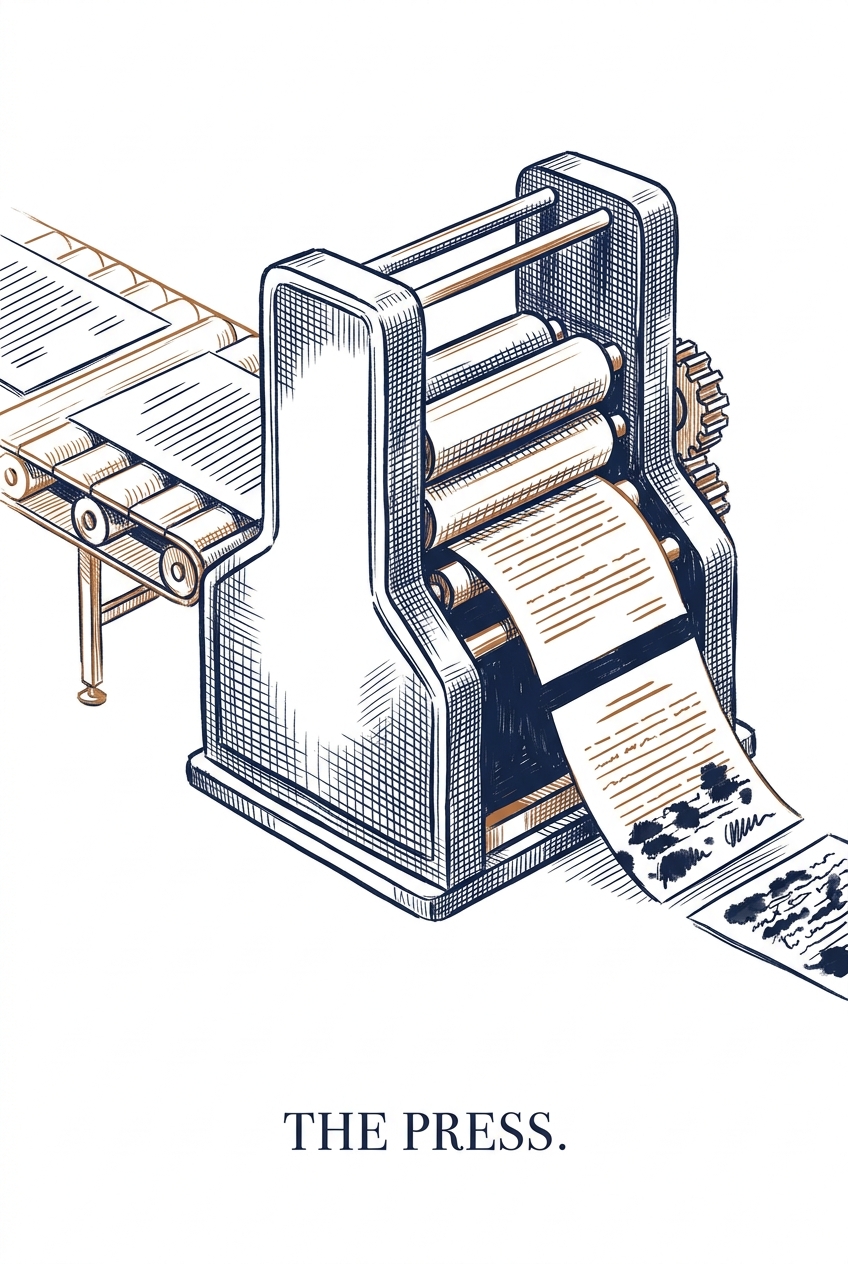
AI news illustration for April 20, 2026

Today's AI Highlights

A sobering reality check emerges for AI professionals: new research shows that even the best LLMs corrupt about 25% of document content during multi-step tasks, while AI models correctly identify the underlying business problem only 28% of the time without explicit guidance. Meanwhile, the window is closing for specialized AI startups as foundation model providers rapidly expand their capabilities, and Chinese tech workers are being asked to train their own AI replacements, signaling a potential shift from AI as assistant to AI as substitute. The message is clear: successful AI adoption requires organizational systems and strategic thinking, not just better tools.

⭐ Top Stories

#1 Writing & Documents

LLMs Corrupt Your Documents When You Delegate

New research reveals that even the best AI models (GPT, Claude, Gemini) corrupt about 25% of document content when handling multi-step editing tasks across professional workflows. The errors are sparse but severe, accumulating silently over longer interactions and larger documents, making current LLMs unreliable for delegated work that requires document integrity.

Key Takeaways

  • Review AI-edited documents carefully after multi-step workflows, as corruption increases with each interaction and compounds over time
  • Limit the length of delegated editing sessions and break complex document tasks into shorter, supervised segments
  • Avoid delegating critical document editing in specialized domains (code, technical notation, structured data) without thorough verification
#2 Creative & Media

Exclusive: Inside Canva AI 2.0 with CPO Cameron Adams

Canva AI 2.0 introduces advanced design automation features that allow professionals to create marketing materials, presentations, and visual content faster without design expertise. The update integrates AI throughout the platform's workflow, potentially reducing time spent on routine design tasks while maintaining brand consistency.

Key Takeaways

  • Explore Canva AI 2.0's automated design features to streamline creation of presentations, social media graphics, and marketing materials without hiring designers
  • Test the AI's ability to maintain brand consistency across multiple assets, potentially reducing review cycles and approval time
  • Consider how AI-assisted design tools can shift your team's focus from execution to strategy and creative direction
#3 Productivity & Automation

Headless everything for personal AI

Major software platforms are shifting to "headless" API-first architectures, allowing AI agents to directly access services without traditional user interfaces. This trend, exemplified by Salesforce's new Headless 360 platform, means your AI assistants will soon be able to interact with business tools more efficiently than clicking through web interfaces. The shift could fundamentally change SaaS pricing models and make API availability a critical factor when choosing business software.

Key Takeaways

  • Evaluate your current SaaS tools for API availability—services without robust APIs may become bottlenecks as AI agents become more central to workflows
  • Prepare for pricing model changes as vendors adapt to AI agents accessing services instead of individual users clicking through interfaces
  • Consider API-first platforms when selecting new business tools, as this will determine how well they integrate with AI assistants
#4 Industry News

Chinese tech workers are starting to train their AI doubles–and pushing back

Chinese tech workers are being asked to train AI agents to replicate their own skills and work patterns, raising immediate questions about job security and the ethics of self-replacement. This trend signals a potential shift in how organizations may approach AI implementation—moving from AI as assistant to AI as replacement—with workers actively participating in their own automation.

Key Takeaways

  • Document your unique value beyond replicable tasks, focusing on judgment, relationships, and strategic thinking that AI cannot easily capture
  • Monitor how your organization frames AI adoption—whether as augmentation or replacement—and prepare accordingly
  • Consider the long-term implications before training AI systems on your specific work patterns and decision-making processes
#5 Industry News

The 12-month window

Many AI startups currently fill gaps that major foundation model providers (OpenAI, Anthropic, Google) haven't yet addressed. Industry insiders acknowledge these specialized tools face an uncertain future as large AI companies expand their capabilities, potentially making niche solutions obsolete within 12 months. This creates strategic risk for businesses building workflows around specialized AI tools.

Key Takeaways

  • Evaluate whether your current AI tools solve problems that major providers might address soon before committing to long-term contracts
  • Prioritize AI tools with strong integration capabilities and data export options to minimize switching costs if providers consolidate
  • Monitor announcements from OpenAI, Google, and Anthropic for feature releases that could replace your specialized tools
#6 Industry News

How the Best Companies Use AI

Leading companies don't leave AI adoption to individual employees—they build organizational systems that ensure everyone can leverage AI effectively. Research from PwC, McKinsey, and case studies like Ramp's internal AI system show that successful AI implementation requires treating it as a growth technology with structured support, not just providing tools and hoping employees figure it out on their own.

Key Takeaways

  • Advocate for organizational AI systems rather than relying solely on individual tool subscriptions—companies that succeed create structured frameworks that raise capabilities across all employees
  • Study how companies like Ramp built internal AI systems (like their Glass platform) to understand what enterprise-grade AI implementation looks like beyond consumer tools
  • Position AI initiatives as growth opportunities rather than cost-cutting measures when discussing implementation with leadership—this framing drives better adoption and investment
#7 Research & Analysis

KWBench: Measuring Unprompted Problem Recognition in Knowledge Work

New research reveals that AI models struggle to independently recognize what type of business problem they're facing—even when they can solve it once told what to do. The best AI only correctly identified the underlying problem structure in 28% of real-world scenarios from contract negotiations, fraud analysis, and organizational dynamics, suggesting current models need explicit framing to be effective.

Key Takeaways

  • Frame the problem explicitly before asking AI for solutions—don't assume it will recognize the underlying structure of your business situation on its own
  • Consider using multiple AI models for complex strategic work, as different models recognize different problem types (routing across 8 models doubled success rates)
  • Verify that AI has correctly identified the type of problem you're facing before implementing its recommendations, especially in negotiations, contracts, or strategic decisions
#8 Productivity & Automation

How to use AI to strengthen teams instead of destroying them

AI tools can fragment team dynamics if deployed without strategic consideration of collaboration patterns. Simply adding AI to talented individuals doesn't create high-performing teams—it requires intentional integration that strengthens rather than replaces human coordination. Organizations need to think beyond individual productivity gains to how AI affects team cohesion and communication.

Key Takeaways

  • Evaluate how AI tools affect team communication patterns before rolling them out across departments
  • Design AI implementation strategies that enhance collaboration rather than isolating individual contributors
  • Monitor for signs of team fragmentation when introducing new AI tools, such as reduced information sharing or siloed decision-making
#9 Coding & Development

Claude Token Counter, now with model comparisons

Simon Willison has released an updated Claude Token Counter tool that now compares token usage across different Claude models. This helps professionals estimate API costs and optimize their prompts by understanding how different models tokenize the same text, which can significantly impact billing and performance when using Claude in production workflows.

Key Takeaways

  • Use the token counter to estimate API costs before deploying Claude-based workflows, as token counts vary between models
  • Compare how different Claude models tokenize your specific prompts to choose the most cost-effective option for your use case
  • Monitor token usage when switching between Claude models to avoid unexpected cost increases in production systems
#10 Coding & Development

Claude comes for the design stack

Claude has introduced new capabilities targeting design workflows, potentially expanding its utility beyond text-based tasks into visual and design-oriented work. Additionally, professionals can now run free coding agents locally on their laptops, offering cost-effective development assistance without cloud dependencies. These developments suggest AI tools are increasingly bridging multiple professional disciplines within single platforms.

Key Takeaways

  • Explore Claude's new design-focused features to potentially consolidate your AI tool stack and reduce subscription costs
  • Test local coding agents on your laptop for development tasks where data privacy or offline access is important
  • Consider how AI tools expanding into adjacent domains (like design) might affect your current workflow integrations

Writing & Documents

1 article
Writing & Documents

LLMs Corrupt Your Documents When You Delegate

New research reveals that even the best AI models (GPT, Claude, Gemini) corrupt about 25% of document content when handling multi-step editing tasks across professional workflows. The errors are sparse but severe, accumulating silently over longer interactions and larger documents, making current LLMs unreliable for delegated work that requires document integrity.

Key Takeaways

  • Review AI-edited documents carefully after multi-step workflows, as corruption increases with each interaction and compounds over time
  • Limit the length of delegated editing sessions and break complex document tasks into shorter, supervised segments
  • Avoid delegating critical document editing in specialized domains (code, technical notation, structured data) without thorough verification

Coding & Development

4 articles
Coding & Development

Claude Token Counter, now with model comparisons

Simon Willison has released an updated Claude Token Counter tool that now compares token usage across different Claude models. This helps professionals estimate API costs and optimize their prompts by understanding how different models tokenize the same text, which can significantly impact billing and performance when using Claude in production workflows.

Key Takeaways

  • Use the token counter to estimate API costs before deploying Claude-based workflows, as token counts vary between models
  • Compare how different Claude models tokenize your specific prompts to choose the most cost-effective option for your use case
  • Monitor token usage when switching between Claude models to avoid unexpected cost increases in production systems
Coding & Development

Claude comes for the design stack

Claude has introduced new capabilities targeting design workflows, potentially expanding its utility beyond text-based tasks into visual and design-oriented work. Additionally, professionals can now run free coding agents locally on their laptops, offering cost-effective development assistance without cloud dependencies. These developments suggest AI tools are increasingly bridging multiple professional disciplines within single platforms.

Key Takeaways

  • Explore Claude's new design-focused features to potentially consolidate your AI tool stack and reduce subscription costs
  • Test local coding agents on your laptop for development tasks where data privacy or offline access is important
  • Consider how AI tools expanding into adjacent domains (like design) might affect your current workflow integrations
Coding & Development

Cloud development platform Vercel was hacked

Vercel, a widely-used cloud platform for deploying web applications and AI-powered sites, suffered a data breach with hackers claiming to sell stolen employee data. If your business uses Vercel to host AI tools, chatbots, or web applications, monitor your account for suspicious activity and review access permissions immediately.

Key Takeaways

  • Review your Vercel account security settings and enable two-factor authentication if you haven't already
  • Monitor deployment logs and access patterns for any unauthorized changes to your hosted applications
  • Assess whether any AI tools or customer-facing applications you've deployed on Vercel could be affected by potential infrastructure vulnerabilities
Coding & Development

Aletheia: Gradient-Guided Layer Selection for Efficient LoRA Fine-Tuning Across Architectures

New research shows that fine-tuning AI models can be made 23% faster on average by selectively applying LoRA adapters only to the most relevant layers, rather than all layers uniformly. This technique, called Aletheia, maintains model performance while significantly reducing training time and computational costs—a practical win for businesses customizing AI models for specific tasks.

Key Takeaways

  • Expect faster custom model training: If your organization fine-tunes AI models for specific tasks, look for tools incorporating selective layer training to reduce costs by 15-28%
  • Consider this for budget planning: Faster fine-tuning means lower compute costs when customizing models, making specialized AI applications more economically viable for mid-sized teams
  • Watch for implementation in popular platforms: This technique works across model sizes (0.5B-72B parameters), so major AI platforms may adopt it to offer cheaper custom model services

Research & Analysis

15 articles
Research & Analysis

KWBench: Measuring Unprompted Problem Recognition in Knowledge Work

New research reveals that AI models struggle to independently recognize what type of business problem they're facing—even when they can solve it once told what to do. The best AI only correctly identified the underlying problem structure in 28% of real-world scenarios from contract negotiations, fraud analysis, and organizational dynamics, suggesting current models need explicit framing to be effective.

Key Takeaways

  • Frame the problem explicitly before asking AI for solutions—don't assume it will recognize the underlying structure of your business situation on its own
  • Consider using multiple AI models for complex strategic work, as different models recognize different problem types (routing across 8 models doubled success rates)
  • Verify that AI has correctly identified the type of problem you're facing before implementing its recommendations, especially in negotiations, contracts, or strategic decisions
Research & Analysis

Consistency Analysis of Sentiment Predictions using Syntactic & Semantic Context Assessment Summarization (SSAS)

A new framework addresses a critical problem for businesses using AI for sentiment analysis: inconsistent results that undermine decision-making. The SSAS method pre-processes data to give AI models better context, improving prediction consistency by up to 30% across customer reviews and feedback datasets—making AI sentiment analysis more reliable for strategic business decisions.

Key Takeaways

  • Recognize that standard LLM sentiment analysis can produce inconsistent results that vary between runs, making them unreliable for business decisions
  • Consider implementing structured data pre-processing frameworks when using AI for customer feedback analysis to improve result consistency
  • Evaluate your current AI sentiment analysis workflows for volatility—if predictions change significantly on repeated runs, you may need better context management
Research & Analysis

The Metacognitive Monitoring Battery: A Cross-Domain Benchmark for LLM Self-Monitoring

New research reveals that leading AI models vary dramatically in their ability to recognize when they're wrong—a critical capability for workplace reliability. Testing shows most models either overconfidently keep all answers or withdraw too cautiously, with accuracy and self-awareness often inversely related. This means the most accurate AI for your task may not be the best at flagging its own mistakes.

Key Takeaways

  • Test AI outputs more rigorously when using highly accurate models, as research shows accuracy and self-awareness don't correlate—top-performing models may be poor at recognizing their errors
  • Consider implementing human review checkpoints for critical decisions, since most models show either blanket confidence or excessive caution rather than selective judgment about answer quality
  • Evaluate models specifically for your domain's needs, as self-monitoring capabilities vary significantly by architecture and don't scale predictably with model size or generation
Research & Analysis

Hallucination as Trajectory Commitment: Causal Evidence for Asymmetric Attractor Dynamics in Transformer Generation

Research reveals that AI hallucinations occur within the first token of generation and are extremely difficult to reverse once started. The study shows that incorrect outputs corrupt correct ones 87.5% of the time, while correcting hallucinations works only 33.3% of the time, suggesting that catching errors early—ideally before generation begins—is far more effective than trying to fix them afterward.

Key Takeaways

  • Verify AI outputs immediately at the start of generation, as hallucinations typically commit to an incorrect path within the first few tokens and become increasingly difficult to correct
  • Implement multi-step validation checks rather than single-point verification, since correcting hallucinations requires sustained intervention across multiple stages
  • Consider regenerating responses entirely rather than attempting to edit or correct hallucinated content, as the research shows corruption spreads more easily than correction
Research & Analysis

ReactBench: A Benchmark for Topological Reasoning in MLLMs on Chemical Reaction Diagrams

Current AI vision models struggle significantly with complex diagrams that involve branching, cycles, and interconnected flows—showing a 30%+ performance drop compared to simpler linear structures. If your work involves analyzing flowcharts, process diagrams, technical schematics, or any visual content with complex relationships, be aware that even advanced AI tools may misinterpret structural connections and dependencies.

Key Takeaways

  • Verify AI outputs when analyzing complex diagrams with branching paths, cycles, or interconnected elements—current models show significant accuracy drops on these structures
  • Consider breaking down complex flowcharts or process diagrams into simpler, linear segments when using AI analysis tools to improve accuracy
  • Watch for counting errors and relationship misidentifications when AI tools process technical diagrams, organizational charts, or workflow visualizations
Research & Analysis

Towards Rigorous Explainability by Feature Attribution

Research highlights critical flaws in popular AI explanation tools like SHAP, which use Shapley values to show why AI models make decisions. These widely-adopted tools may be misleading decision-makers in high-stakes business scenarios, prompting a shift toward more rigorous, mathematically provable explanation methods that could affect how you validate and trust AI outputs.

Key Takeaways

  • Question the reliability of SHAP and similar explanation tools when making critical business decisions, as research shows they lack mathematical rigor
  • Document which explanation methods your team uses for AI model decisions, especially in high-stakes scenarios like hiring, lending, or compliance
  • Watch for emerging 'symbolic' explanation tools that offer provable accuracy as alternatives to current popular methods
Research & Analysis

SQL functions in Google Sheets to fetch data from Datasette

Simon Willison demonstrates three methods for pulling SQL query results from Datasette databases directly into Google Sheets, enabling professionals to integrate custom data sources into their spreadsheet workflows. The techniques range from simple importdata() functions to Google Apps Scripts for authenticated API calls, making database queries accessible without leaving Sheets.

Key Takeaways

  • Use importdata() function in Google Sheets to fetch data from Datasette APIs with simple SQL queries without coding
  • Create named functions to wrap complex Datasette queries for reusable, team-friendly spreadsheet formulas
  • Implement Google Apps Scripts when authentication tokens are required for private or restricted data sources
Research & Analysis

FD-NL2SQL: Feedback-Driven Clinical NL2SQL that Improves with Use

Researchers have developed a system that converts natural language questions into database queries for clinical oncology data, and it improves automatically through user feedback. When clinicians edit the generated SQL queries, those corrections are saved and used to improve future results, creating a self-improving assistant that gets better with use. This demonstrates a practical pattern for enterprise AI tools: systems that learn from user corrections without requiring manual retraining.

Key Takeaways

  • Consider implementing feedback loops in your database query tools where user corrections automatically improve future results
  • Explore natural language interfaces for complex database queries if your team lacks SQL expertise but needs ad-hoc data access
  • Watch for AI tools that build internal knowledge banks from user edits, reducing repetitive corrections over time
Research & Analysis

Why Fine-Tuning Encourages Hallucinations and How to Fix It

Research reveals that fine-tuning AI models on new information can actually increase factual errors by degrading previously learned knowledge. New techniques using self-distillation can help models learn new facts while maintaining accuracy on existing knowledge, offering a path to more reliable AI outputs in business applications.

Key Takeaways

  • Expect increased hallucinations when using fine-tuned models, especially regarding facts the base model previously knew correctly
  • Consider models that use self-distillation techniques if accuracy on established facts is critical to your workflow
  • Verify outputs more carefully when working with custom fine-tuned models, particularly for factual claims about existing knowledge
Research & Analysis

The Spectral Geometry of Thought: Phase Transitions, Instruction Reversal, Token-Level Dynamics, and Perfect Correctness Prediction in How Transformers Reason

Researchers have discovered that AI models process reasoning tasks differently than factual recall at a fundamental level, and can predict whether an answer will be correct before it's generated with near-perfect accuracy. This internal "spectral signature" varies between base models and instruction-tuned versions, suggesting that how you prompt and which model version you choose significantly impacts reasoning quality in ways that weren't previously measurable.

Key Takeaways

  • Consider using instruction-tuned models over base models for reasoning tasks, as they show fundamentally different internal processing patterns that may affect output quality
  • Monitor early responses in multi-step reasoning tasks—the research suggests correctness can be predicted before final answers appear, potentially saving time on flawed reasoning chains
  • Expect larger models to show more pronounced differences between reasoning and factual recall modes, which may help you choose appropriately sized models for specific tasks
Research & Analysis

MEDLEY-BENCH: Scale Buys Evaluation but Not Control in AI Metacognition

New research reveals that larger AI models are better at evaluating their own answers but not necessarily better at correcting them—a critical gap for professionals relying on AI accuracy. The study found smaller models sometimes match larger ones in self-correction ability, and all models struggle more with knowing when they're wrong than with generating quality outputs. This suggests that model size alone doesn't guarantee reliable self-checking in your AI workflows.

Key Takeaways

  • Don't assume larger models automatically provide better self-correction—test your specific AI tools' ability to revise answers when challenged, not just their initial output quality
  • Implement external verification steps in critical workflows since all tested models showed a systematic gap between detecting errors and fixing them
  • Consider that some models revise based on argument quality while others follow consensus—understand which behavior your AI tool exhibits when you provide feedback
Research & Analysis

Integrating Graphs, Large Language Models, and Agents: Reasoning and Retrieval

This research survey maps how combining graphs (like knowledge graphs and workflow diagrams) with LLMs improves AI reasoning and retrieval across business domains. For professionals, this explains why some AI tools work better for complex tasks—they're using graph structures behind the scenes to organize information and make connections your prompts alone can't achieve.

Key Takeaways

  • Consider tools that combine graph structures with LLMs when working with complex, interconnected data like organizational workflows, customer relationships, or technical dependencies
  • Evaluate whether your AI tasks involve reasoning (connecting multiple pieces of information), retrieval (finding specific data), or recommendations—each benefits from different graph-LLM approaches
  • Watch for AI tools in your industry (cybersecurity, healthcare, finance, materials) that explicitly mention knowledge graphs or structured reasoning for more reliable outputs
Research & Analysis

Structured Abductive-Deductive-Inductive Reasoning for LLMs via Algebraic Invariants

Researchers have developed a framework that makes AI reasoning more reliable by preventing weak logical steps from undermining entire chains of thought. The system enforces a "weakest link" principle—ensuring AI conclusions can't be stronger than their least-supported premise—which could lead to more trustworthy AI outputs in complex reasoning tasks. This addresses a core limitation where current LLMs mix up guessing with proven facts.

Key Takeaways

  • Expect future AI tools to better distinguish between hypotheses and verified facts, reducing confident-sounding but unreliable outputs
  • Watch for reasoning-focused AI applications that explicitly show confidence levels for each step in their logic chains
  • Consider that current AI assistants may propagate weak assumptions through multi-step analyses without flagging uncertainty
Research & Analysis

LLM Reasoning Is Latent, Not the Chain of Thought

Research suggests that AI reasoning happens internally in ways we can't directly observe, rather than through the visible step-by-step explanations (chain-of-thought) that models show us. This means the explanations AI provides for its answers may not accurately reflect how it actually arrived at those conclusions, which has implications for trusting and validating AI outputs in professional settings.

Key Takeaways

  • Verify AI outputs independently rather than relying solely on the model's explanation of its reasoning process
  • Consider that chain-of-thought prompts may improve results through additional processing time rather than transparent reasoning
  • Expect that AI 'explanations' serve more as post-hoc justifications than faithful accounts of internal decision-making
Research & Analysis

The World Leaks the Future: Harness Evolution for Future Prediction Agents

Researchers developed Milkyway, an AI system that improves prediction accuracy by learning from its own evolving analysis over time, rather than waiting for final outcomes. The system maintains a persistent 'harness' that captures lessons from tracking factors and gathering evidence across repeated predictions, achieving significant accuracy improvements (38% on FutureX, 25% on FutureWorld). This approach could enhance AI tools that help professionals make decisions with incomplete information,

Key Takeaways

  • Consider how AI prediction tools in your workflow currently handle uncertainty—systems that learn from their own evolving analysis (not just final outcomes) may provide more reliable guidance for time-sensitive decisions
  • Watch for AI assistants that maintain persistent context across repeated analyses of the same question, as this 'internal feedback' approach could improve forecasting accuracy in business planning and risk assessment
  • Evaluate whether your current AI tools for market analysis or project planning can track and refine their reasoning over time, rather than treating each prediction as isolated

Creative & Media

4 articles
Creative & Media

Exclusive: Inside Canva AI 2.0 with CPO Cameron Adams

Canva AI 2.0 introduces advanced design automation features that allow professionals to create marketing materials, presentations, and visual content faster without design expertise. The update integrates AI throughout the platform's workflow, potentially reducing time spent on routine design tasks while maintaining brand consistency.

Key Takeaways

  • Explore Canva AI 2.0's automated design features to streamline creation of presentations, social media graphics, and marketing materials without hiring designers
  • Test the AI's ability to maintain brand consistency across multiple assets, potentially reducing review cycles and approval time
  • Consider how AI-assisted design tools can shift your team's focus from execution to strategy and creative direction
Creative & Media

Frequency-Aware Flow Matching for High-Quality Image Generation

A new image generation technique called FreqFlow produces higher-quality AI images by separately handling global structure and fine details during the creation process. This advancement achieves state-of-the-art results and could lead to better quality outputs in AI image tools you use for marketing materials, product mockups, and visual content creation.

Key Takeaways

  • Expect improved image quality in future updates to AI image generators like Midjourney, DALL-E, or Stable Diffusion as this frequency-aware approach gets adopted
  • Watch for better consistency between overall composition and fine details in generated images, reducing the need for multiple regenerations
  • Consider that this research addresses a common frustration where AI images look good at first glance but fall apart in the details
Creative & Media

Weak-to-Strong Knowledge Distillation Accelerates Visual Learning

Researchers have developed a training acceleration technique that reduces the time needed to train high-quality AI vision models by up to 4.8 times. The method uses a counterintuitive approach: temporarily learning from a weaker model during early training stages, then switching it off once performance improves. This could significantly reduce costs and time for businesses training custom computer vision models for tasks like image classification, object detection, or image generation.

Key Takeaways

  • Consider this approach if you're training custom vision models in-house, as it could cut training time and costs by up to 80% while maintaining final model quality
  • Watch for AI vendors to adopt this technique, potentially leading to faster model updates and lower pricing for vision-based services
  • Evaluate whether your current vision AI workflows involve model retraining, as this method works across classification, object detection, and image generation tasks
Creative & Media

China’s Netflix Expects AI to Create Bulk of Shows in Five Years

China's leading streaming platform iQiyi expects AI to produce most of its content within five years, signaling a major industry transformation that's prompting the company's largest restructuring since launch. This timeline suggests AI video generation tools will mature rapidly for commercial production use, potentially affecting how businesses create marketing videos, training content, and customer-facing media.

Key Takeaways

  • Prepare for AI video tools to reach commercial-grade quality within 3-5 years for business content creation
  • Consider piloting AI video generation now for internal training materials and simple marketing content to build expertise
  • Watch for enterprise video creation platforms to emerge that mirror this production-scale capability at business level

Productivity & Automation

12 articles
Productivity & Automation

Headless everything for personal AI

Major software platforms are shifting to "headless" API-first architectures, allowing AI agents to directly access services without traditional user interfaces. This trend, exemplified by Salesforce's new Headless 360 platform, means your AI assistants will soon be able to interact with business tools more efficiently than clicking through web interfaces. The shift could fundamentally change SaaS pricing models and make API availability a critical factor when choosing business software.

Key Takeaways

  • Evaluate your current SaaS tools for API availability—services without robust APIs may become bottlenecks as AI agents become more central to workflows
  • Prepare for pricing model changes as vendors adapt to AI agents accessing services instead of individual users clicking through interfaces
  • Consider API-first platforms when selecting new business tools, as this will determine how well they integrate with AI assistants
Productivity & Automation

How to use AI to strengthen teams instead of destroying them

AI tools can fragment team dynamics if deployed without strategic consideration of collaboration patterns. Simply adding AI to talented individuals doesn't create high-performing teams—it requires intentional integration that strengthens rather than replaces human coordination. Organizations need to think beyond individual productivity gains to how AI affects team cohesion and communication.

Key Takeaways

  • Evaluate how AI tools affect team communication patterns before rolling them out across departments
  • Design AI implementation strategies that enhance collaboration rather than isolating individual contributors
  • Monitor for signs of team fragmentation when introducing new AI tools, such as reduced information sharing or siloed decision-making
Productivity & Automation

Claude Token Counter, now with model comparisons

Claude's new Opus 4.7 model uses a different tokenizer that increases token counts by 1.0-1.35x (up to 1.46x in testing) compared to previous versions, while maintaining the same pricing. This means you'll consume your token budgets faster when using Opus 4.7, potentially affecting costs for high-volume users despite identical per-token pricing.

Key Takeaways

  • Monitor your token usage if upgrading to Claude Opus 4.7, as the same prompts will consume 10-46% more tokens than Opus 4.6
  • Use token counting tools before switching models to estimate the actual cost impact on your specific use cases and content types
  • Consider staying on Opus 4.6 for high-volume, cost-sensitive workflows where the new tokenizer's efficiency trade-off may not justify increased consumption
Productivity & Automation

Imperfectly Cooperative Human-AI Interactions: Comparing the Impacts of Human and AI Attributes in Simulated and User Studies

Research comparing simulated AI interactions with real human studies reveals that AI transparency matters far more than personality traits when people work with AI agents in partially competitive scenarios like negotiations. While simulations suggested personality and AI capabilities were equally important, actual human users prioritized transparent AI behavior above all else—a critical insight for choosing and configuring AI tools in workplace settings.

Key Takeaways

  • Prioritize AI tools that offer transparency in their decision-making process, especially when using AI for negotiations, hiring decisions, or any scenario where goals may not be perfectly aligned
  • Recognize that simulated AI performance may not reflect real-world user preferences—test AI tools with actual team members before full deployment
  • Consider transparency features more heavily than advanced capabilities when evaluating AI agents for collaborative work, as users value understanding AI reasoning over raw performance
Productivity & Automation

PolicyBank: Evolving Policy Understanding for LLM Agents

New research shows AI agents can learn to better follow company policies through feedback, addressing a critical problem where AI tools misinterpret vague workplace rules. The PolicyBank system allows AI agents to refine their understanding of organizational policies over time, closing up to 82% of interpretation gaps that cause compliance issues in real-world deployments.

Key Takeaways

  • Anticipate that AI agents following company policies will initially misinterpret ambiguous rules—plan for a testing phase with corrective feedback before full deployment
  • Consider implementing memory systems that allow your AI tools to learn from policy violations rather than rigidly following flawed initial interpretations
  • Document policy gaps and edge cases as they emerge during AI agent testing to systematically improve compliance over time
Productivity & Automation

A decision-making framework for solopreneurs

This article presents a decision-making framework for solopreneurs that emphasizes evaluating whether decisions are reversible. For professionals using AI tools independently, this framework can help prioritize which AI implementations to test versus commit to long-term, reducing decision paralysis when choosing between multiple AI solutions.

Key Takeaways

  • Apply the reversibility test when evaluating new AI tools—prioritize trying solutions with low switching costs first
  • Distinguish between reversible decisions (testing a new AI writing assistant) and irreversible ones (committing to enterprise AI infrastructure)
  • Reduce decision fatigue by quickly moving forward on reversible AI experiments rather than over-analyzing every tool choice
Productivity & Automation

Changes in the system prompt between Claude Opus 4.6 and 4.7

Claude Opus has been updated from version 4.6 to 4.7 with changes to its underlying system prompt—the instructions that guide the AI's behavior. Understanding these changes can help professionals optimize their prompts and anticipate differences in Claude's responses, particularly for complex reasoning tasks and structured outputs.

Key Takeaways

  • Review your existing Claude prompts to ensure they still produce expected results with version 4.7's updated behavior
  • Monitor for changes in response style, formatting, or reasoning patterns that may affect your automated workflows
  • Consider testing critical use cases with both versions if you notice unexpected output changes
Productivity & Automation

CIG: Measuring Conversational Information Gain in Deliberative Dialogues with Semantic Memory Dynamics

Researchers have developed a framework to measure how much new information each contribution adds to a group discussion by tracking claims and consolidating them into structured memory. This approach could improve AI meeting assistants and collaboration tools by helping them identify which comments actually advance understanding versus just adding noise. The system evaluates contributions on novelty, relevance, and broader implications—metrics that outperform simple measures like message length.

Key Takeaways

  • Evaluate your AI meeting tools for whether they can distinguish substantive contributions from repetitive comments when generating summaries
  • Consider how AI assistants could prioritize discussion points that introduce genuinely new information rather than just the longest or most recent messages
  • Watch for collaboration platforms that can track which team members are advancing project understanding versus restating known information
Productivity & Automation

Weak-Link Optimization for Multi-Agent Reasoning and Collaboration

New research shows that multi-agent AI systems perform better when you identify and strengthen the weakest agent rather than just boosting the strongest ones. The WORC framework automatically detects which AI agent in a collaborative setup is underperforming and allocates more computational resources to compensate, achieving 82% accuracy on reasoning tasks while improving overall system stability.

Key Takeaways

  • Consider that when using multiple AI agents together, one weak performer can undermine the entire system's output quality
  • Watch for emerging tools that automatically identify which agent in your workflow is the bottleneck and needs more resources
  • Expect more stable results from multi-agent systems as providers adopt weak-link optimization approaches
Productivity & Automation

Experience Compression Spectrum: Unifying Memory, Skills, and Rules in LLM Agents

Research reveals that AI agents handling long-term tasks face a critical efficiency problem: they can't dynamically adjust how they compress and store learned experiences. Current systems lock into a single compression method (memory, skills, or rules), missing opportunities to optimize performance by switching between approaches based on context—a gap that directly impacts agent reliability and cost in extended workflows.

Key Takeaways

  • Expect performance bottlenecks when deploying AI agents for multi-session or long-running tasks, as current systems can't adapt their memory management strategies
  • Consider the trade-off between specificity and transferability when choosing agent-based tools—highly compressed knowledge (rules) transfers better but loses contextual detail
  • Watch for next-generation agent platforms that can dynamically switch between detailed memory recall and compressed skill execution based on task requirements
Productivity & Automation

Subliminal Transfer of Unsafe Behaviors in AI Agent Distillation

Research reveals that AI agents can inherit unsafe behaviors through training even when explicit dangerous content is filtered out. When creating custom AI agents or using distilled models, hidden behavioral biases can transfer through the structure of training data itself, not just the content—meaning standard content filtering may not prevent risky behaviors from propagating.

Key Takeaways

  • Recognize that filtering explicit keywords or dangerous content from AI training data may not prevent unsafe behaviors from transferring to new models
  • Exercise caution when using smaller AI models distilled from larger ones, as they may inherit unintended behavioral patterns not visible in their training data
  • Evaluate AI agents based on their actual behavior patterns in production, not just the safety of their training content
Productivity & Automation

Francis Bacon's 3 Types of Thinkers - Ada Palmer

This philosophical framework about thinking styles (ants who gather, spiders who spin theories, and bees who transform) offers a lens for evaluating how you interact with AI tools. Understanding whether you're using AI to simply collect information, generate isolated ideas, or synthesize and transform inputs can help you choose the right prompting strategies and tools for your actual work needs.

Key Takeaways

  • Assess whether you're using AI as an 'ant' (pure information gathering), 'spider' (generating ideas from scratch), or 'bee' (transforming and synthesizing inputs) to match tools to your actual workflow needs
  • Consider shifting from pure collection mode to transformation mode by feeding AI outputs back through additional processing steps rather than accepting first-draft results
  • Recognize when your prompts ask AI to be a 'spider' (create from nothing) versus a 'bee' (synthesize provided materials) to set appropriate expectations for output quality

Industry News

18 articles
Industry News

Chinese tech workers are starting to train their AI doubles–and pushing back

Chinese tech workers are being asked to train AI agents to replicate their own skills and work patterns, raising immediate questions about job security and the ethics of self-replacement. This trend signals a potential shift in how organizations may approach AI implementation—moving from AI as assistant to AI as replacement—with workers actively participating in their own automation.

Key Takeaways

  • Document your unique value beyond replicable tasks, focusing on judgment, relationships, and strategic thinking that AI cannot easily capture
  • Monitor how your organization frames AI adoption—whether as augmentation or replacement—and prepare accordingly
  • Consider the long-term implications before training AI systems on your specific work patterns and decision-making processes
Industry News

The 12-month window

Many AI startups currently fill gaps that major foundation model providers (OpenAI, Anthropic, Google) haven't yet addressed. Industry insiders acknowledge these specialized tools face an uncertain future as large AI companies expand their capabilities, potentially making niche solutions obsolete within 12 months. This creates strategic risk for businesses building workflows around specialized AI tools.

Key Takeaways

  • Evaluate whether your current AI tools solve problems that major providers might address soon before committing to long-term contracts
  • Prioritize AI tools with strong integration capabilities and data export options to minimize switching costs if providers consolidate
  • Monitor announcements from OpenAI, Google, and Anthropic for feature releases that could replace your specialized tools
Industry News

How the Best Companies Use AI

Leading companies don't leave AI adoption to individual employees—they build organizational systems that ensure everyone can leverage AI effectively. Research from PwC, McKinsey, and case studies like Ramp's internal AI system show that successful AI implementation requires treating it as a growth technology with structured support, not just providing tools and hoping employees figure it out on their own.

Key Takeaways

  • Advocate for organizational AI systems rather than relying solely on individual tool subscriptions—companies that succeed create structured frameworks that raise capabilities across all employees
  • Study how companies like Ramp built internal AI systems (like their Glass platform) to understand what enterprise-grade AI implementation looks like beyond consumer tools
  • Position AI initiatives as growth opportunities rather than cost-cutting measures when discussing implementation with leadership—this framing drives better adoption and investment
Industry News

#335 Sriram Raghavan: Why IBM Is Betting Everything on Small AI Models

IBM is proving that smaller, efficiently-trained AI models can match GPT-4 and Claude performance on specific tasks while running more cost-effectively in enterprise environments. This matters for professionals because it signals a shift toward specialized, domain-specific AI tools that may offer better ROI than general-purpose large models, especially for code generation and mathematical tasks in hybrid cloud setups.

Key Takeaways

  • Evaluate smaller, task-specific AI models for your workflows instead of defaulting to the largest available options—IBM's 8B parameter model matches GPT-4o on code and math tasks at lower cost
  • Prioritize data quality over model size when selecting AI tools, as clean, well-structured training data now drives better results than parameter count alone
  • Consider hybrid cloud deployment options for AI workloads, as smaller models enable more flexible infrastructure choices without sacrificing performance
Industry News

A strange quirk of the legal profession means lawyers may soon have to adopt AI—or face malpractice

Legal professionals may face malpractice liability if they fail to adopt AI tools that make work faster and more efficient, as fiduciary duty requires using available technology to serve clients effectively. This precedent could extend beyond law to other professional services where AI demonstrably improves outcomes. The shift signals that AI adoption is moving from optional to obligatory in fields with professional standards.

Key Takeaways

  • Review your professional liability insurance to understand how AI tool adoption (or non-adoption) affects your coverage and obligations
  • Document your AI usage policies and quality control processes to demonstrate due diligence in client service
  • Monitor industry standards in your field for emerging expectations around AI-assisted work and efficiency benchmarks
Industry News

AI’s Token Economy Revolution Creates New China Tech Winners

Chinese AI providers are offering significantly cheaper API access and models, creating cost-competitive alternatives to Western AI services. This price competition could reduce your AI tool expenses if you're willing to evaluate providers based in China. The shift may also pressure established providers to lower their pricing or improve value propositions.

Key Takeaways

  • Evaluate Chinese AI model providers for cost savings on API calls and token usage in your current workflows
  • Monitor pricing changes from your existing AI service providers as competitive pressure increases
  • Consider diversifying AI vendors to balance cost, performance, and data privacy requirements
Industry News

Unlocking Next-Gen Customer Experiences with Data Intelligence for Marketing

Databricks has launched Data Intelligence for Marketing, a platform that combines AI with customer data to help marketing teams personalize campaigns and predict customer behavior. The tool integrates first-party data with AI models to automate audience segmentation, optimize ad spending, and generate actionable insights without requiring deep technical expertise. This represents a shift toward making enterprise-grade marketing AI accessible to teams currently using basic analytics tools.

Key Takeaways

  • Evaluate if your current marketing stack can integrate first-party customer data with AI for personalization—this platform shows where enterprise tools are heading
  • Consider consolidating fragmented marketing data sources to enable AI-driven insights, as unified data is becoming essential for competitive marketing automation
  • Watch for opportunities to automate audience segmentation and campaign optimization if you're currently doing this manually in spreadsheets
Industry News

AdaVFM: Adaptive Vision Foundation Models for Edge Intelligence via LLM-Guided Execution

New research demonstrates a system that makes AI vision models run efficiently on edge devices (phones, tablets, IoT) by dynamically adjusting their computational intensity based on the task at hand. This could enable more responsive, privacy-conscious AI vision features in business applications without requiring constant cloud connectivity or draining device batteries.

Key Takeaways

  • Watch for AI vision tools that work offline or with reduced latency, as this technology enables practical deployment of sophisticated image recognition on local devices
  • Consider the cost-performance tradeoffs when selecting vision AI services, as adaptive models can reduce computational costs by up to 78% while maintaining accuracy
  • Anticipate more responsive mobile and edge AI applications for tasks like document scanning, visual search, and inventory management that don't require cloud processing
Industry News

Improving Reasoning Capabilities in Small Models through Mixture-of-Layers Distillation with Stepwise Attention on Key Information

Researchers have developed a new method to make smaller AI models better at reasoning tasks by teaching them not just what to think, but how to focus attention on key information step-by-step. This breakthrough could lead to more capable yet affordable AI assistants that can handle complex problem-solving without requiring expensive, large-scale models.

Key Takeaways

  • Anticipate smaller, more efficient AI models with improved reasoning capabilities becoming available in the coming months, potentially reducing costs for complex tasks
  • Consider that future compact AI tools may handle mathematical calculations and logical reasoning more reliably, making them suitable for business analysis and decision support
  • Watch for new AI assistant options that offer better reasoning at lower computational costs, which could expand AI accessibility for small and medium businesses
Industry News

FineSteer: A Unified Framework for Fine-Grained Inference-Time Steering in Large Language Models

FineSteer is a new framework that helps control AI model behavior during use—reducing harmful outputs and hallucinations without retraining the model. This research addresses a critical challenge for businesses: making AI responses safer and more accurate in real-time, which could lead to more reliable AI tools with better quality control built into existing systems.

Key Takeaways

  • Monitor your AI tool providers for implementations of inference-time steering techniques that could improve output quality without service disruptions or retraining delays
  • Expect future AI tools to offer more granular control over model behavior, allowing you to adjust safety and accuracy settings based on specific use cases
  • Consider the trade-off between steering effectiveness and model utility when evaluating AI tools—this research shows both can be maintained simultaneously
Industry News

Harmonizing Multi-Objective LLM Unlearning via Unified Domain Representation and Bidirectional Logit Distillation

Researchers have developed a new method to safely remove sensitive or harmful information from AI language models without degrading their overall performance or making them overly cautious. This advancement addresses a critical challenge for organizations using AI tools: ensuring models can 'forget' proprietary data, customer information, or problematic content while maintaining their usefulness and resisting attempts to extract the supposedly removed information.

Key Takeaways

  • Anticipate improved AI safety features in enterprise tools as vendors adopt techniques to remove sensitive data from models without compromising performance
  • Evaluate AI vendors on their ability to handle data removal requests while maintaining model utility, especially if you work with regulated data
  • Consider that future AI tools may better balance privacy protection with functionality, reducing over-cautious responses that currently limit productivity
Industry News

Sequential KV Cache Compression via Probabilistic Language Tries: Beyond the Per-Vector Shannon Limit

Researchers have developed a breakthrough method to compress AI model memory (KV cache) by up to 914x more efficiently than current best practices, which could dramatically reduce the cost and memory requirements of running large language models. This technology exploits the sequential nature of language to achieve compression rates far beyond what's theoretically possible with current per-vector methods, and it works alongside existing optimization techniques.

Key Takeaways

  • Anticipate significantly lower costs for running AI models as this compression technology matures and gets implemented in commercial tools over the next 12-24 months
  • Watch for AI service providers to offer longer context windows at similar or lower prices as sequential compression enables more efficient memory usage
  • Consider that this research validates investing in AI tools with large context capabilities, as the technical barriers to supporting long conversations are becoming more solvable
Industry News

Bureaucratic Silences: What the Canadian AI Register Reveals, Omits, and Obscures

Canada's Federal AI Register reveals a critical gap between government transparency claims and actual accountability practices. The analysis of 409 government AI systems shows that transparency reports often hide the human judgment, training requirements, and uncertainty involved in AI operations—presenting tools as more reliable and autonomous than they actually are. This matters for business professionals because similar transparency gaps likely exist in vendor documentation and enterprise AI

Key Takeaways

  • Question vendor claims about AI reliability by asking specifically about human oversight requirements, training needs, and how uncertainty is managed in their systems
  • Document the actual human discretion and judgment your team applies when using AI tools, as this context is often missing from official system descriptions
  • Recognize that 'AI transparency' reports may focus on technical specifications while obscuring the sociotechnical realities of how systems actually work in practice
Industry News

How the AI Boom is Fueling the US Copper Race

AI's explosive growth is driving unprecedented electricity demand, making copper supply a critical bottleneck for data center expansion and AI infrastructure. US copper production stagnation and reliance on imports could impact the availability and cost of AI services, potentially affecting pricing and reliability of the cloud platforms and AI tools businesses depend on daily.

Key Takeaways

  • Monitor your AI service providers' infrastructure announcements and pricing changes, as copper shortages may drive up data center costs that get passed to customers
  • Consider diversifying across multiple AI platforms to reduce risk if supply chain constraints affect specific providers' expansion plans
  • Factor potential infrastructure limitations into long-term AI adoption strategies, especially for compute-intensive applications
Industry News

Siemens Warns EU’s AI Rules Will Deter Investment in Europe

Siemens CEO warns that EU's strict AI regulations may push the company to invest in AI development primarily in the US and China instead of Europe. This signals potential delays or limitations in AI-powered tools and features for European business users, as major enterprise vendors may prioritize other markets for innovation and deployment.

Key Takeaways

  • Monitor your enterprise AI vendors' regional strategies, as regulatory differences may affect feature availability and deployment timelines in your market
  • Consider the geographic implications when evaluating AI tools, particularly if your organization operates across multiple regions with varying regulations
  • Prepare for potential delays in accessing cutting-edge AI features if you're based in heavily regulated markets
Industry News

Asia Regulators Raise Scrutiny on Banks Amid Mythos AI Fears

Asian financial regulators are increasing cybersecurity oversight due to concerns about Anthropic's Mythos AI model, signaling potential compliance requirements for businesses using AI tools in regulated industries. This regulatory scrutiny may lead to stricter vendor assessments and usage policies for AI systems handling sensitive financial data. Professionals in banking and finance should prepare for enhanced security reviews of their AI tool stack.

Key Takeaways

  • Review your current AI tools for compliance with financial sector security standards, especially if handling sensitive data
  • Document which AI models and vendors you're using to prepare for potential regulatory inquiries
  • Monitor announcements from your industry regulators about AI usage guidelines and restrictions
Industry News

TSMC Earnings, New N3 Fabs, The Nvidia Ramp

TSMC's cautious earnings outlook suggests potential constraints in AI chip production capacity, which could impact availability and pricing of AI-powered tools and services you rely on. If the world's leading chip manufacturer isn't fully committing to AI infrastructure expansion, expect possible delays in new AI features, slower performance improvements, or higher costs for enterprise AI tools in the coming quarters.

Key Takeaways

  • Monitor your AI tool vendors for potential price increases or service tier changes as chip supply constraints may drive up infrastructure costs
  • Consider locking in current pricing or multi-year contracts with critical AI services before potential cost increases materialize
  • Evaluate alternative AI tools that may use different chip architectures or providers to reduce dependency on TSMC-manufactured processors
Industry News

Palantir posts mini-manifesto denouncing inclusivity and ‘regressive’ cultures

Palantir, a major enterprise AI and data analytics provider, has published a controversial manifesto criticizing diversity initiatives and corporate inclusivity programs. For professionals evaluating AI vendors, this represents a significant shift in corporate positioning that may affect procurement decisions, particularly in organizations with strong DEI commitments or government contracts.

Key Takeaways

  • Review your organization's vendor policies and values alignment requirements before renewing or initiating Palantir contracts
  • Consider alternative enterprise AI and data analytics platforms if your company prioritizes diversity and inclusion initiatives
  • Monitor stakeholder and employee reactions if your organization currently uses Palantir's AI tools, as this may affect adoption and morale